Introduction
Some of the aspects of our online experiences are influenced by recommendation systems powered by AI. They provide movie and music recommendations, recommended products, and other related contents according to users’ interest.
Such systems suggest data based on what the user has been doing on their avail. Big businesses reap from use of Artificial Intelligence since it will help businesses match and define individual consumers, engaging and satisfying them.
This paper focuses on the overview of the AI recommendation systems, what they are, advantages, and the disadvantages, and the prospects of personalization for digital services.
What Are Recommendation Systems?
Recommendation systems can be defined as the technologies that recommend products, services or information. The ones I have found include tracking user’s data to try and determine what could be of interest to the same users. Facebook, Netflix, YouTube, Amazon, and many other companies employ them.
These systems are in turn improved by AI to give recommendations in better accuracy. The recommendations let customers find items of interest, and companies improve the captivating interest and sales.
How AI Powers Personalization
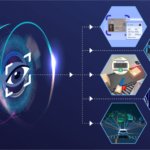
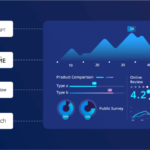
This is so because AI-driven recommendation systems analyse vast sets of data. They groom the ideas and patterns of the user by the use of machine learning. Observing the liking history of many users, AI thus extrapolates and makes an attempt at guessing what the user might like.
It is important to note that as deep learning models are used, they are likely to get batter over time as they learn to perform the task. The aim is to have a concise and personal experience depending on the customers’ preferences.
Types of AI-Based Recommendation Systems
The kinds of recommendation system that employ the use of artificial intelligence is of three types. To limit the content, the use of content-based filtering to recommend items related to the materials selected in the past.
Collaborative filtering identifies patterns of users’ behavior to predict the most appreciated items. Mixed Models adapt two of the methods for greater accuracy in delivering on the targeted performance. These strategies make it possible to maintain recommendations as current and particular.
Data Collection for Personalization
AI relies on vast amounts of data for recommendations. User and preferences, history, clicks, and other interrelated factors are determined. This behavior analysis is helpful in determining people’s interests. People’s data privacy is always at risk, thus, practices are made to be ethical as much as possible. The more entities that are fed into AI, the better the recommendations that will be forwarded to the clients.
Machine Learning in Recommendations
Machine learning algorithms refine recommendations over time. It involves the use of a training dataset to train supervisors or some other sort of models. Unsupervised learning deals with classification of the features without the target values being previously defined. I choose to learn on recommendations to enhance the results by incorporating user feedback. Such techniques do enable the personalization of the experience by AI.
Deep Learning and Neural Networks
Deep learning enhances AI-based recommendations. Neural networks embrace the feature of learning the difficult equations and data patterns and then predicting the results. These models identify the characteristics of the two items and user preference for similar items.
Discovering the nature of text-based communication is made possible with more complex techniques such as NLP. This makes sure that recommendations made get to be very relevant in the case of deep learning.
Real-World Applications
On this topic, it is pertinent to note that the use of AI-based recommendations is not limited to a particular industry. Selling online has many similarities to recommending a movie to watch next, similar to Netflix, which recommends programmes based on already watched programmes.
Some or most of the websites that offer products and services help shoppers to recommend their relevant next products to buy. Popular applications that can be compared to Spotify include applications that generate customized playlists.
Many social networking sites recommend content likely to be interesting to the users. AI constantly improves suggestions in order to promote user experience further.
Benefits of AI-Powered Recommendations
AI-driven personalization enhances user experience. Useful recommendations are helpful and reduce the time to be spent as compare to decreases satisfaction. This is through the use of recommendation, which is used by various businesses in order to expand the sales base.
Sentiment towards personalization: Carrying out specific promotional activities are focused towards the client is an effective way of engaging the customer. Customer retention is also enhanced by using artificial intelligent based recommendations. These systems are peculiarly advantageous to the users as well as such businesses.
Challenges of AI in Recommendation Systems
Nonetheless, there are issues with AI recommendations. There are issues concerning privacy because organizations and companies undergo data collection extensively. Algorithm bias may affect recommendations. Over-personalization limits content diversity.
To manage the high computational requirements, enhanced structural facilities are very crucial. To mitigate the above factors, companies must respond to them as a way of ensuring that they retain customers trust.
The Future of AI in Personalization
AI-driven personalization will continue evolving. Advanced algorithms will improve accuracy. The aspects of AI ethics and the issue of its disclosure will become equally relevant. Voice and visual search will improve the recommendations.
There are three significant trends in Artificial Intelligence that will become prominent – one of them is real-time personalization which will get more complicated. Businesses will [insert] AI to personalize your experience even more than it is currently done.
Conclusion
Artificial intelligence controls people’s perception of digital experiences through recommendation systems. They use users’ data to provide recommendations for the content of the items. Customers will be employed more in business to increase their engagement hence improving the satisfactory rates.
Still, there are some issues that have to be solved, for example, data privacy, and the issue with the algorithm’s prejudice. The further development of the AI-mediating tradition in providing recommendations is therefore promising for the enhancement of the way users engage with technology.
It will go on enhancing the level of personalization where it will engage with the customer at maximum efficiency.